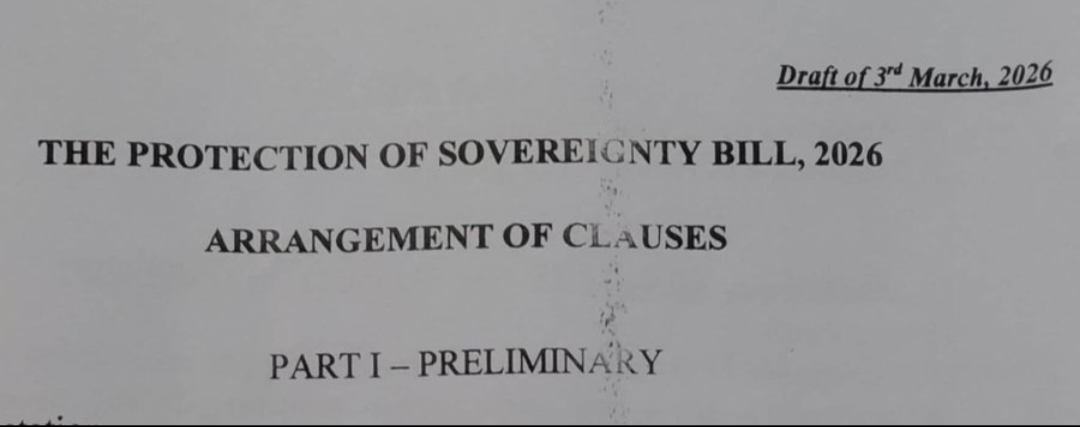
Uganda stands at a crossroads.
At a time when our nation should be deepening democracy, strengthening freedom, and listening to the voices of its people, we are instead confronted with a proposed law that many fear could silence dissent, criminalize political opposition, and punish voices beyond our borders.
The proposed Protection of Sovereignty Bill is being presented as a shield for Uganda’s national interests. But to many citizens, activists, and members of the diaspora, it feels less like protection and more like persecution.
This is not just another bill.
This is a bill that could decide whether speaking out becomes a crime.
This is a bill that could decide whether political disagreement is treated as treason.
This is a bill that raises painful questions about the future of freedom in Uganda.
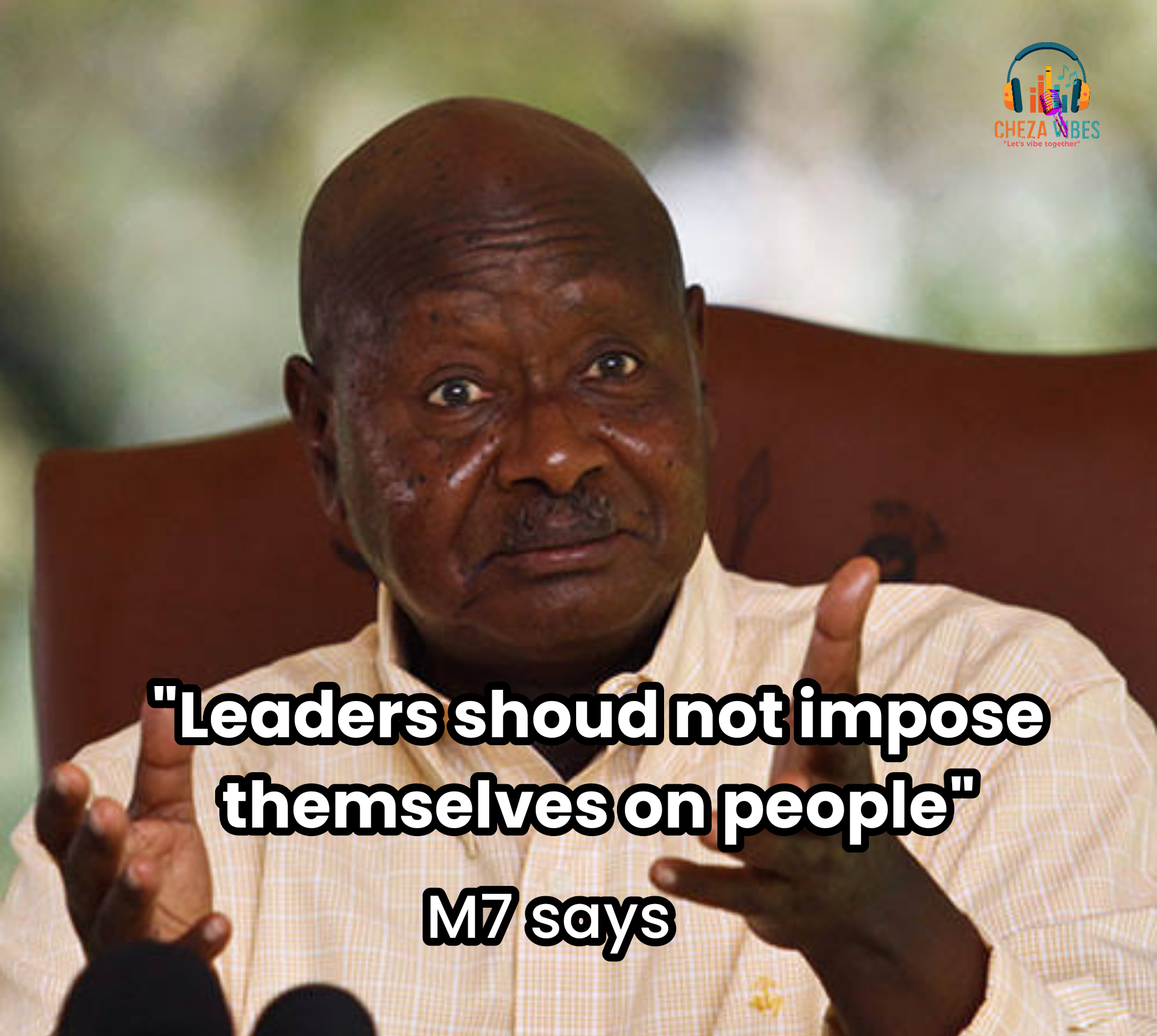
Recent reports confirm that the NRM Parliamentary Caucus, under the guidance of President Yoweri Kaguta Museveni, has already resolved to support the bill once it is tabled in Parliament.
For many Ugandans, that announcement landed like a storm.
Because behind the language of “sovereignty” lies a growing fear: is this law really about protecting Uganda, or is it about protecting power?
For years, Uganda’s political space has been marked by rising tension between the government and the opposition, especially supporters of Robert Kyagulanyi Ssentamu, popularly known as Bobi Wine.
Bobi Wine has become more than a politician.
To many young Ugandans, he represents hope.
He represents resistance.
He represents the belief that ordinary citizens can challenge entrenched power.
That is why any law that appears capable of restricting political speech, foreign engagement, or diaspora mobilization will naturally be viewed with suspicion.
And that suspicion is not paranoia.
It is history speaking.
Ugandans have seen what happens when laws are introduced in the name of “security” but later used to suppress opposition, journalists, civil society organizations, and activists.
The fear today is deeply emotional because it is personal.
It is about the student in Makerere who posts a political opinion online.
It is about the mother in Boston who contributes money to support democratic activism back home.
It is about the youth in Kampala who share videos criticizing government policy.
It is about whether their voices can still exist tomorrow.
A country does not become stronger by imprisoning criticism.
A nation does not become sovereign by silencing its own people.
Real sovereignty begins with the people.
The people are Uganda.
Not a party.
Not a minister.
Not a single office.
Uganda belongs to its citizens, including those in the diaspora.
Millions of Ugandans abroad send money home, support families, invest in businesses, and contribute to national discourse.
To treat external voices as suspicious simply because they speak from outside the country risks alienating the very people who continue to sustain the nation economically and socially.
The diaspora is not the enemy.
Dissent is not betrayal.
Speaking is not sabotage.
If this bill is allowed to become a tool against political expression, then it threatens the constitutional promise of freedom of speech and association.
And that should concern every Ugandan, regardless of party.
Today it may be Robert Kyagulanyi Ssentamu.
Tomorrow it could be a journalist.
The next day it could be a student leader.
Then a church leader.
Then an ordinary citizen with a Facebook account.
The danger of such laws is that they rarely remain limited to their original target.
Once power is centralized, it expands.
Once speech is criminalized, fear spreads.
Once fear spreads, democracy begins to suffocate.
Uganda deserves better.
Our nation deserves laws that unite rather than divide.
We need legislation that protects citizens from corruption, poverty, unemployment, and injustice — not laws that appear designed to intimidate political opponents.
The true strength of a nation is not measured by how effectively it punishes criticism.
It is measured by how courageously it tolerates it.
A confident government does not fear speech.
A legitimate democracy does not imprison disagreement.
A free Uganda must never become a place where political opinion is treated like a crime.
This is why Parliament must examine this bill with the utmost scrutiny.
Every clause must be transparent.
Every penalty must be justified.
Every citizen must have the right to understand what is being proposed in their name.
Because silence today may become regret tomorrow.
Uganda’s future cannot be built on fear.
It must be built on freedom.
It must be built on justice.
It must be built on the voices of its people.
And those voices must never be jailed for speaking.