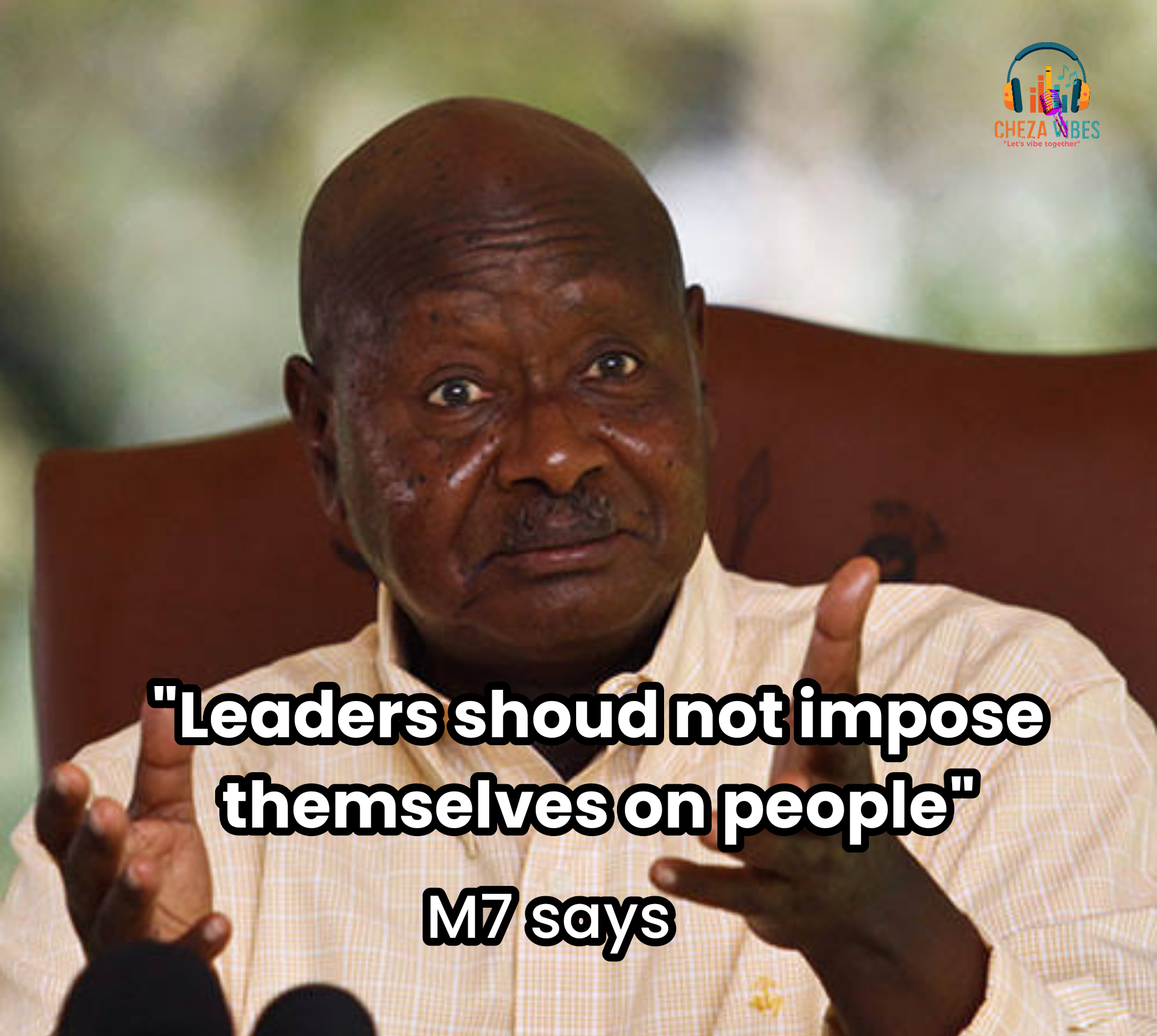
President Yoweri Kaguta Museveni, the leader of Uganda, has urged political and religious leaders not to impose themselves on the people but instead to earn legitimacy through service, performance, and persuasion.
The President made the remarks during commemorations marking the anniversary of Janani Luwum, an Anglican Archbishop who was killed in 1977 during the regime of former President Idi Amin. The annual memorial is held in Kitgum District and is attended by national leaders, clergy, and members of the public.

Key Message
Museveni emphasized that true leadership should be based on convincing citizens through good policies and service delivery rather than coercion or intimidation. He warned that leaders who force themselves onto the population risk losing legitimacy and moral authority.
He referenced Uganda’s past political turmoil, particularly under Idi Amin’s rule, as an example of what happens when power is maintained through fear rather than consent.
Political Context
However, the President’s remarks have generated debate across the country. Critics point out that Museveni himself has been in power since 1986, making him one of Africa’s longest-serving leaders. He first came to power after a five-year guerrilla war and has since won multiple elections.
Opposition figures argue that constitutional amendments — including the removal of presidential term limits in 2005 and the removal of the age limit in 2017 — have enabled him to extend his stay in office. They question whether his long tenure aligns with his call against leaders imposing themselves on citizens.
Supporters, on the other hand, maintain that Museveni’s continued leadership reflects electoral support and credit him with stabilizing the country after years of political instability.
Conclusion
President Museveni’s message highlights the importance of leadership rooted in service and persuasion rather than force. Yet, given that he has led Uganda for nearly four decades since 1986, the statement has sparked national discussion about leadership, democracy, and political longevity in the country.